

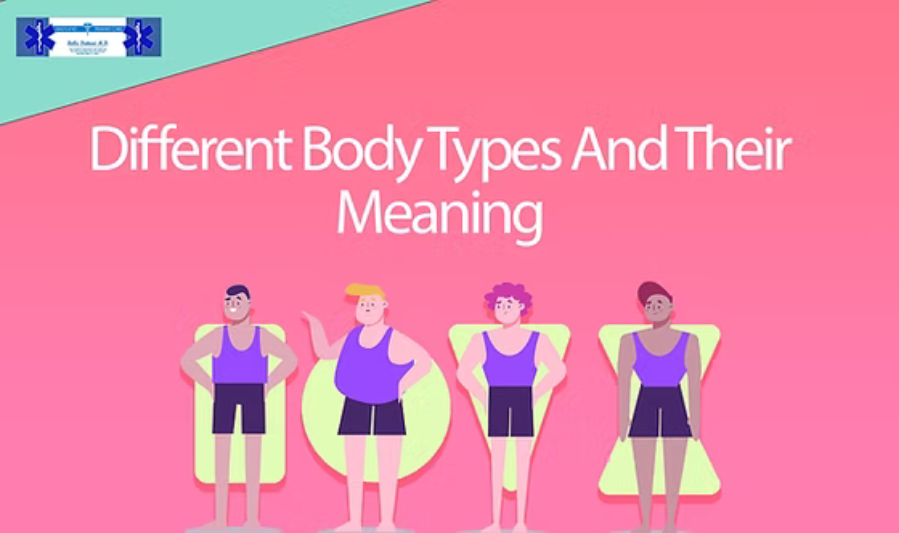
Forget the Fruit Salad: Dressing Well Is Geometry, Not Labels
Traditional advice sorts women into apples, pears, and hourglasses and issues each a list of permissions and bans. It is not useless, but it misses the deeper truth: clothes look good when their lines, proportions, and focal points work with the body wearing them — and that is geometry any person of any shape can use. Learning how to dress for your body type is really learning to see: where your visual weight sits, where you want the eye to travel, and which fits create the silhouette you intend. This guide replaces the rulebook with principles — fit first, proportion second, focal points third — that work for every body, every budget, and every personal style, including the one you are still discovering.
Fit First: The 80 Percent Nobody Wants to Hear
Most “body type problems” are fit problems wearing a disguise. The principles, in order of impact. Shoulder seams belong on shoulders; a seam drooping two centimetres down the arm cheapens any garment and slouches any frame, and it cannot be styled away. Fabric should skim, not cling or swim; the right size shows the body’s line without mapping every detail — and the right size is whatever achieves that, regardless of the number printed inside, which varies so wildly between brands that it deserves no loyalty and less emotion. Length is destiny: where a hem ends creates a horizontal line the eye reads as width, so hems should land at narrow points (the ankle bone, just above or below the knee, the wrist) rather than at the widest part of a limb. Tuck and tailor: a front-tuck that defines the waist, a sleeve pushed to the forearm, trousers hemmed to the shoe — these zero-cost adjustments do more than most purchases. A modest tailoring budget spent on your five most-worn pieces will outperform a shopping spree, every season, because fit is the difference between wearing clothes and being worn by them — a foundation our personal style guide for beginners builds on when defining a signature look.
Proportion: The Ratio Game Every Stylist Plays
Once fit is right, proportion is the game. The eye finds balance when the silhouette’s parts relate harmoniously, and you control the ratios with a few levers. The waist point: raising the visible waistline (high-rise bottoms, tucked tops, cropped layers over long lines) lengthens legs; lowering it lengthens the torso — choose per your own geometry, not per trend. Volume balance: pair one volume with one structure — a wide trouser with a fitted top, an oversized blazer with a slim leg — because volume everywhere reads as swamp and structure everywhere reads as armour. The rule of thirds: outfits divide most pleasingly into unequal parts (a short jacket over a long dress, a long coat over cropped trousers) rather than halves, which is why the half-and-half outfit so often feels subtly wrong in the mirror without an identifiable culprit. Vertical lines — a long open layer, a column of one colour, a pendant necklace — draw the eye up and down and lengthen; horizontal emphasis — belts, contrast hems, colour blocking — settles and widens where placed. None of these are rules about your body. They are dials, and your preferences set them — the same dials that assemble the day-to-evening combinations in our companion guide to work outfit ideas.
One more dial deserves naming: fabric behaviour. Structured fabrics (tailored wool, firm cotton, ponte) hold a silhouette’s architecture and photograph as “dressed”; fluid fabrics (silk, jersey, chiffon) follow the body’s movement and read as softness and ease. Most bodies look best in a deliberate mixture — structure where you want the eye to see intention, fluidity where you want comfort and motion — and most outfit disappointments are an accidental all-of-one: the fluid top over fluid trousers that dissolves the shape, or the fully structured outfit that reads as uniform. Check your favourite outfits against this dial; the pattern you find is your personal formula, ready to shop by.
Focal Points: Decide Where the Eye Goes
Every outfit has a focal point whether you chose it or not — the brightest colour, the boldest print, the statement shoe, the bare shoulder. Dressing well means appointing the focal point deliberately at a feature you enjoy, and quieting the competition elsewhere. Love your shoulders? A neckline that shows them, with everything below kept calm. Proud of your waist? The belt, the tuck, the wrap line that draws the circle there. Prefer the focus on your face? Colour and detail near the face — earrings, a scarf, the neckline’s architecture — with the rest in supporting neutrals. The corollaries free you from the fruit-salad bans: any body can wear any trend that can be restyled to put the focus where the wearer wants it, at the proportion the wearer prefers. “Flattering” is not a property of garments. It is a decision about attention, and it belongs to the person in the mirror.
Dress the Body You Have Today
The final principle is the one that makes the others usable: the wardrobe must serve the body that exists now, not the one from five years ago or the one planned for next spring. Bodies change — with age, health, children, training, life — and dressing a remembered body produces the daily discomfort of clothes that argue with their wearer. Audit against today’s measurements and today’s life; keep the pieces that fit the present beautifully, release the museum of other sizes, and let alterations bridge the small gaps. Confidence, the thing every style guide ultimately sells, is not manufactured by a silhouette trick. It is the by-product of a person whose clothes fit, whose proportions were chosen, and whose reflection looks intentional. That is available at every size, every age, and every budget — which is precisely why it is worth learning.
The Bottom Line
How to dress for your body type: fit first (seams, skim, hem placement, tailoring), proportion second (waist point, volume balance, thirds), focal points chosen by you — applied to the body you have today. Discard the fruit, keep the geometry, and the mirror becomes a collaborator.
